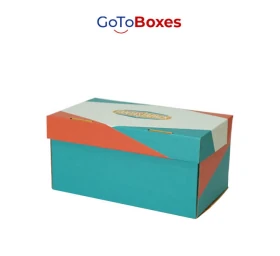
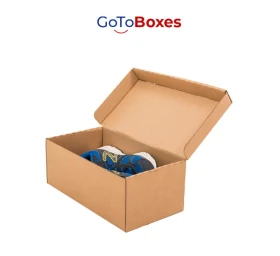
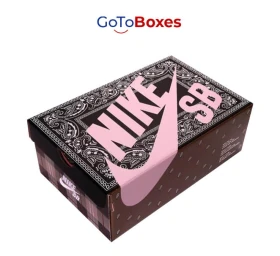





| Box Style | As Mention Above |
|---|---|
| Dimension (L + W + H) | All Custom Sizes & Shapes |
| MOQ | NO Minimum |
| Paper Stock | 10pt to 28pt (60lb to 400lb) Eco-Friendly Kraft, E-flute Corrugated, Bux Board, Cardstock |
| Printing | No Printing, CMYK, CMYK + 1 PMS color, CMYK + 2 PMS colors |
| Finishing | Gloss Lamination, Matte Lamination, Gloss AQ, Gloss UV, Matte UV, Spot UV, Embossing, Foiling |
| Included Options | Die Cutting, Gluing, Scored,Perforation |
| Additional Options | Eco-Friendly, Recycled Boxes, Biodegradable |
| Proof | Flat View, 3D Mock-up, Physical Sampling (On request) |
| Turnaround | 8 - 10 Business Days |
| Shipping | FLAT Position |
A good shoe box starts with the pair that has to fit inside it.
GoTo Boxes supplies custom shoe boxes UK footwear businesses can specify around the actual product, rather than forcing different styles and sizes into a generic carton. From everyday trainers and children's footwear to heels, formal shoes and boots, the box can be planned around the footwear dimensions, presentation requirements and route to the customer.
Choose plain or custom printed shoe boxes, add your logo and product information, select the board construction and decide whether the packaging is intended mainly for retail shelves, stockrooms, gifting, ecommerce fulfilment or wholesale distribution.
The result should be straightforward: enough room to pack the footwear correctly, enough structural strength for its intended use and no unnecessary packaging volume.
Build the Box Around the Shoe, Not a Standard Guess
The most useful measurement for bespoke footwear packaging is the space the packed pair genuinely needs.
Measure your footwear in the position it will sit inside the finished box. Include anything that forms part of the normal pack, such as tissue paper, protective wrapping, heel supports, shoe bags, spare laces or printed inserts.
Work from internal dimensions first
Internal length, width and height determine whether the footwear fits comfortably. External dimensions are different because the thickness and construction of the board add to the overall size.
For production, tell us:
- the footwear type
- the largest size that must fit
- required internal length, width and height
- how the shoes will be positioned
- whether tissue, inserts or accessories sit inside
- whether several shoe sizes will share one box
- the quantity required
If you are still deciding on dimensions, use GoTo Boxes' dedicated shoe box dimensions guide for sizing information rather than relying on an assumed "standard" adult box.
One box size does not have to cover the whole range
Using a single oversized carton for every SKU can look convenient at first, but it may increase board consumption, storage volume and empty space around smaller pairs.
A footwear collection can often be grouped into a small number of sensible packaging footprints. For example, children's shoes may use one format, standard adult styles another and bulky high-top trainers or boots a deeper construction.
That approach keeps the packaging system manageable without making every product use the same box.
Select a Construction That Matches How You Sell
Not every shoe packaging box needs the same level of board strength.
The right construction depends on footwear weight, box size, stacking conditions, presentation and whether the box will travel inside a separate shipping carton.
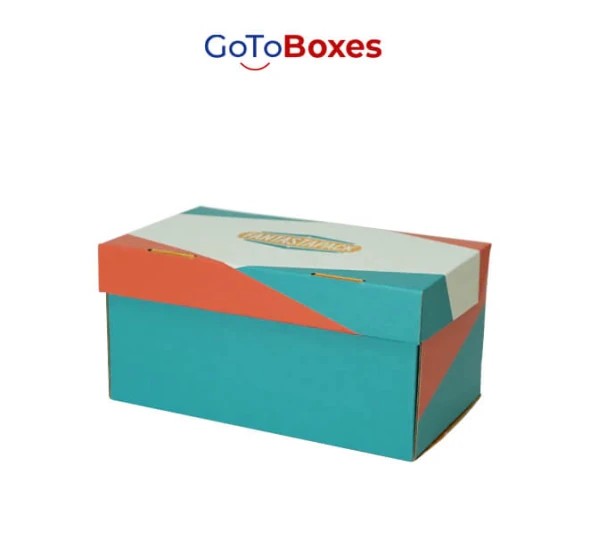
Two-piece lid and base shoe boxes
The traditional detachable lid and base remains a practical option for many retail footwear ranges. It opens easily, offers a broad printable lid surface and allows staff to access stock without complicated closures.
It works particularly well when the box will mainly be used for retail presentation, customer collection and organised stock storage.
Custom cardboard shoe boxes for everyday ranges
Custom cardboard shoe boxes are suitable when you want a balance between printability, manageable weight and efficient production.
Cardstock and paperboard formats can work well for lighter footwear and retail presentation. The specification should still reflect the dimensions and weight of the actual pair rather than selecting board thickness by appearance alone.
Corrugated formats for heavier handling
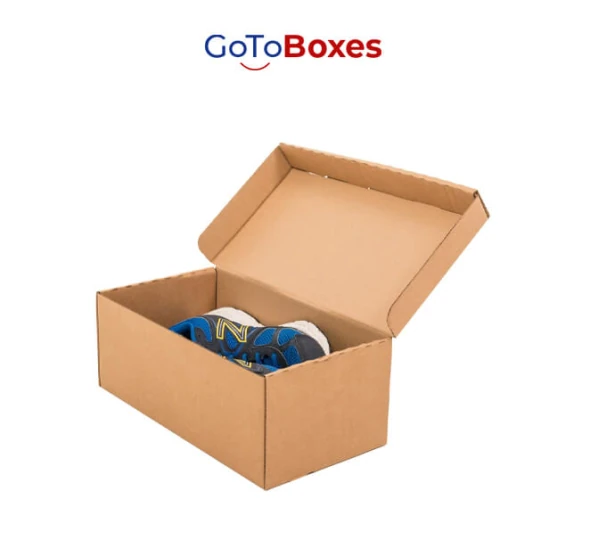
Corrugated board is worth considering when footwear is heavier, the pack is large or the box will face more demanding handling.
Boots, chunky trainers and direct-to-customer orders can put different demands on packaging than lightweight retail flats. A corrugated structure can provide added rigidity without automatically turning the shoe box into an oversized pack.
GoTo Boxes currently lists cardstock, Kraft and E-flute corrugated stocks alongside CMYK and PMS printing and several finishing options.
Rigid presentation boxes
For limited editions, gifting and higher-value footwear, a rigid construction can give the pack a more substantial presentation.
Rigid packaging usually uses more material and takes more storage space than a folding carton, so it should be chosen because the product and selling price justify the format, not simply because it looks luxurious.
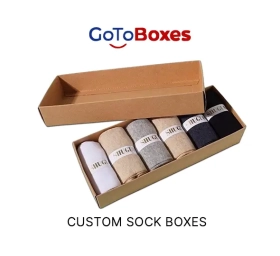
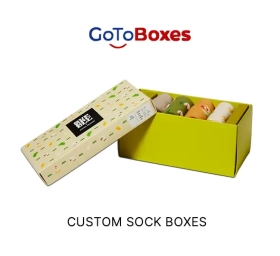
For custom sock boxes, consider the sock size, number of pairs, folding style and retail presentation so the packaging fits neatly, protects the product and creates a professional branded appearance.
Make Custom Shoe Boxes With Logo Useful as Well as Branded
A large logo is not automatically a good packaging design.
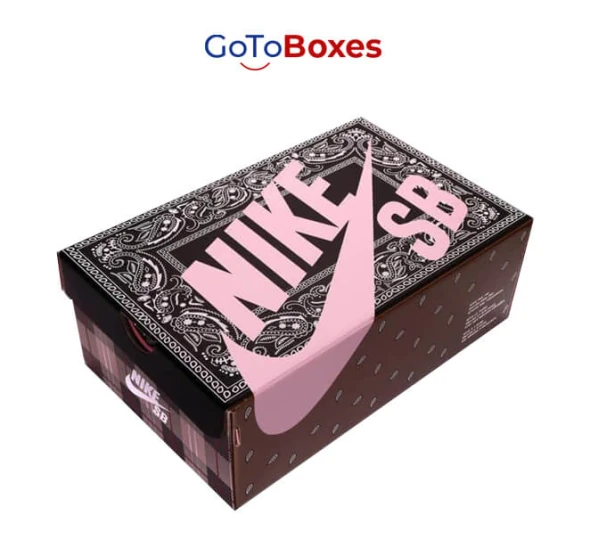
The most effective custom shoe boxes with logo use branding alongside practical information. A customer, shop assistant or warehouse operative should be able to understand what is inside without opening several boxes.
Depending on your sales process, useful printed elements can include:
- brand logo and colour system
- footwear style or collection name
- size information
- product or SKU code
- barcode area
- care instructions
- website or social details
- QR code
- recycling information that accurately matches the finished pack
- inside-lid messaging
Keep variable information easy to update
If one printed box design will be used across multiple sizes or colours, avoid permanently printing variable details that change from SKU to SKU.
Leave a suitable area for labels, barcodes or product stickers. This lets you benefit from branded wholesale packaging without producing a different printed carton for every minor variation.
Plan barcodes before decorative finishes
Barcodes and QR codes need clear contrast and sufficient clean space around them. Avoid placing them over heavily textured artwork, foil effects, folds or areas where the print may be distorted.
Decorative finishes should support the design, not interfere with stock control.
Choose Print and Finish According to the Selling Environment
Footwear packaging has large flat panels, which makes it well suited to strong graphic design. That does not mean every panel needs full coverage.
A simple one or two-colour design can be effective for a practical everyday range, while full-colour artwork can suit fashion-led collections, collaborations and seasonal launches.
Options may include CMYK printing, spot or Pantone colour matching, matte or gloss finishes, foil, embossing, debossing and selected spot effects. GoTo Boxes lists CMYK and PMS colour options together with matte, gloss, Spot UV, embossing and foiling among its current packaging specifications.
Printing inside the lid
The inside lid is valuable space because it appears after purchase rather than competing with required product information on the exterior.
It can hold a short brand story, shoe-care guidance, styling suggestions, returns information or a simple thank-you message.
Keep it useful. Large amounts of decorative copy usually add print coverage without giving the customer much reason to read it.
Protect the Footwear Without Filling the Box With Extras
The box should restrict excessive movement without pressing against the shoe.
Tissue paper is often enough for straightforward styles. More delicate footwear may need additional separation between pairs, protection around decorative details or support around a heel.
Before ordering inserts simply for appearance, check whether they solve a real packing problem.
Allow for delicate finishes
Patent surfaces, polished leather, suede, metallic trims and decorative hardware can mark if two shoes rub together.
For these products, the internal packing method matters as much as the outer carton. Test the intended tissue, wrap or insert using the actual product before approving a production quantity.
Treat retail packaging and courier packaging separately
A box that presents footwear neatly on a shop shelf is not automatically designed to take every impact encountered through a parcel network.
If your normal fulfilment process places the branded shoe box inside an outer shipping carton, size the two packs together. Excess space between them may require more void fill and increases the overall parcel footprint.
If you want the primary shoe box to function as the shipping pack as well, tell us at the specification stage so the structure can be assessed for that use.
Empty Shoe Boxes for Retailers, Resellers and Stockrooms
Not every footwear business needs a separate printed design for each range.
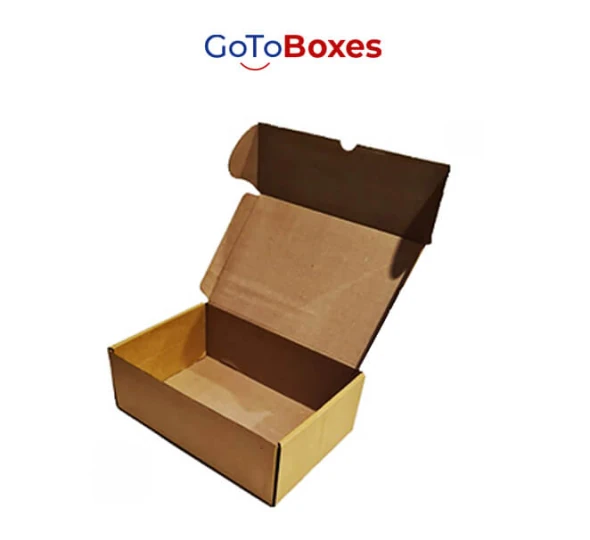
Empty shoe boxes can be supplied as plain or lightly branded packaging for businesses that need flexible stock. They can be useful for independent retailers, sample departments, replacement packaging, returns processing and businesses handling mixed footwear lines.
A restrained generic design can then use product labels to identify the individual style, colour and size.
This can be more practical than holding many small quantities of different printed box designs.
Plan Wholesale Shoe Boxes Around Repeat Ordering
Businesses searching for custom shoe boxes wholesale are usually looking for more than a lower unit price. They also need repeatability.
Once a box works properly, future runs should be based on a controlled specification covering dimensions, board, structure, artwork and finish.
That is particularly important for wholesale custom shoe boxes used across several stores, fulfilment sites or product launches.
The main factors that influence packaging cost
Pricing can change according to:
- finished dimensions
- board type and amount of material used
- box construction
- print coverage and number of colours
- decorative finishes
- inside printing
- inserts or dividers
- order quantity
- number of different artwork versions
- packing and delivery requirements
For wholesale shoe boxes, it is often worth reviewing which details genuinely add value before increasing the specification.
A carefully sized carton with clean printing can be a better commercial decision than an oversized box carrying several unnecessary finishes.
Reduce SKU complexity before ordering
Suppose a footwear brand sells 18 styles in eight sizes. That does not necessarily mean it needs 144 different boxes.
The brand might use three structural sizes, one core branded artwork design and variable labels for size, colour and product code.
That keeps warehouse identification straightforward while reducing the number of printed packaging variants the business has to manage.
A Practical UK Footwear Example
Consider the range sold by UK footwear retailer Clarks. Its current UK offer covers women's, men's, kids' and school footwear.
The useful packaging lesson is the variety of product shapes involved. A low children's school shoe, an adult trainer and an ankle boot place very different demands on internal height, length and support.
For a business selling a similarly varied footwear range, specifying a small family of box sizes is usually more sensible than attempting to force every pair into one carton.
This example relates only to the practical packaging needs created by a broad footwear catalogue and does not imply any commercial relationship with GoTo Boxes.
Information to Send for a More Accurate Quote
You do not need to understand every printing term before requesting custom packaging.
Start with the information you already know:
Product details
Tell us what footwear you are packing and the largest size the box needs to accommodate.
Required dimensions
Provide internal length, width and height where possible. If you already have a box that fits well, you can also use it as a reference specification.
Quantity
Give the quantity you expect to order and, if useful, an indication of future repeat volumes. This helps when comparing practical production options for custom shoe boxes wholesale.
Artwork
Send your logo or existing artwork if available. If your design is still being developed, describe where branding, product labels and other information need to appear.
Packing method
Explain whether the box is for retail, ecommerce, wholesale distribution, gifting or a combination of uses.
This often changes which structural details matter most.
Approve the Physical Pack, Not Just the Screen
Artwork proofs are useful for checking text, layout and panel position, but a screen cannot tell you exactly how a pair of shoes will sit inside a finished box.
For a new footwear size or unfamiliar structure, check the specification against the real product before committing to a larger production run.
Look at:
- internal fit with the normal tissue or accessories
- ease of closing the lid
- pressure on heels, uppers and toe areas
- how several filled boxes stack
- barcode and label positioning
- artwork alignment around folds and edges
- how the box fits any outer shipping carton
This practical approval step can identify problems that are easy to miss when reviewing dimensions alone.
Request Custom Printed Shoe Boxes From GoTo Boxes
Whether you need a clean range of shoe packaging boxes for a new footwear launch, branded retail cartons, flexible empty stock boxes or repeat wholesale packaging, start with the product specification.
Send GoTo Boxes your footwear type, required internal dimensions, quantity, preferred material and artwork. We can then discuss a box construction, printing approach and finish suited to the way your footwear will actually be packed, stored and sold.